

Children must normally use a child car seat in cars, vans and goods vehicles until they are 12 years old or 135cm tall — whichever comes first — then an adult seat belt. That is the everyday rule parents know. Licensed taxis and private hire vehicles (minicabs) are different — and those differences are exactly where drivers get stopped, argued with and sometimes wrongly threatened with prosecution.
This feature unpacks what GOV.UK and the seat-belt regulations actually say, who carries the legal can for under-14s, when the taxi/PHV exceptions apply, who has to bring the plastic, what happens when police get it wrong, and whether your local licensing policy can rewrite national road traffic law.
The basic national rule
In a normal private car, GOV.UK is blunt: children must normally use a suitable child car seat until they are 12 or 135cm tall (about 4ft 5in), whichever they reach first. After that they must wear an adult seat belt if one is fitted.
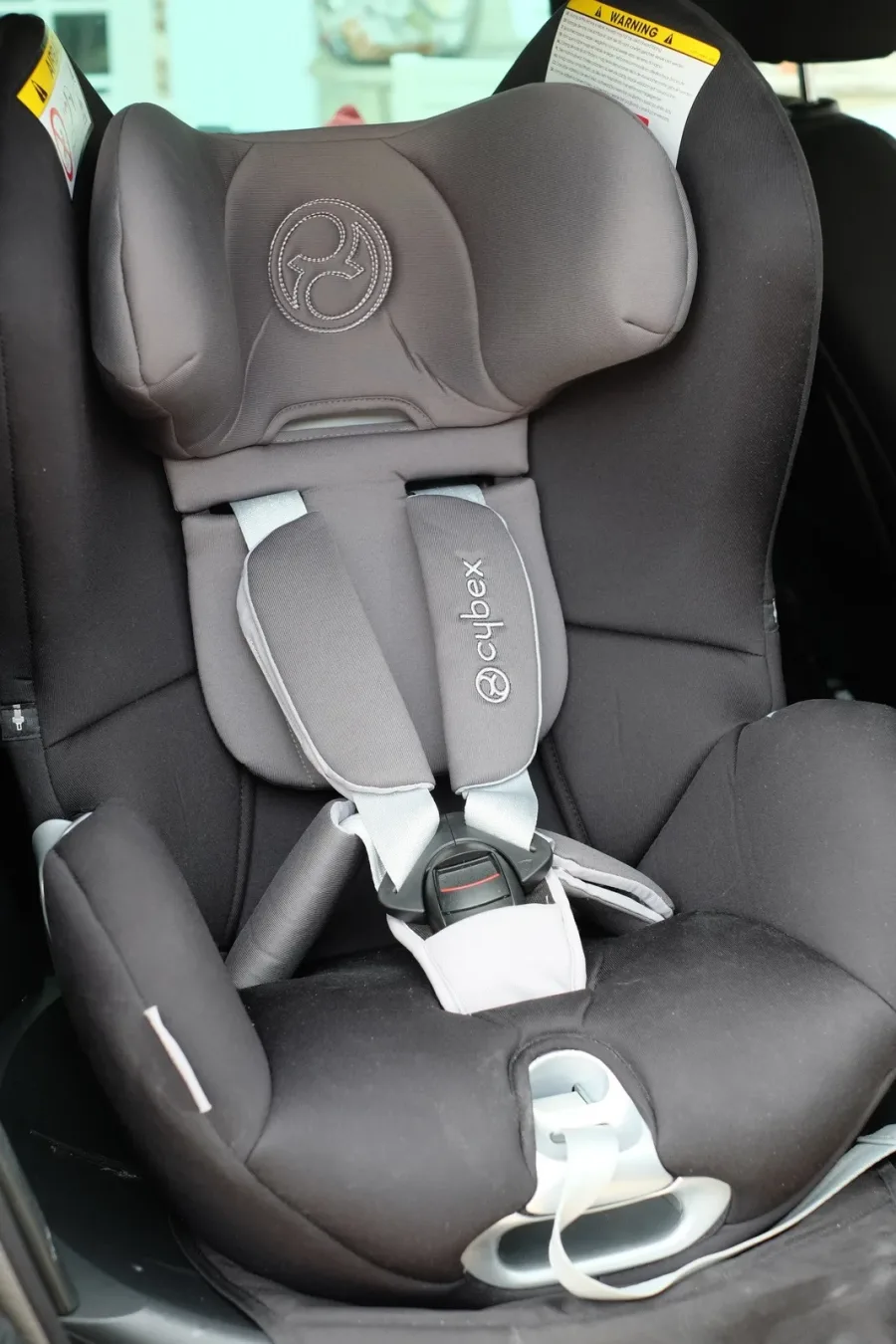
Child seats sold in the UK must meet an approved safety standard — shown on a label with a capital ‘E’ in a circle. Newer seats are usually chosen by the child’s height (often sold as i-Size / R129). Older-style seats are chosen by weight (R44) and labelled in groups from baby carriers (Group 0/0+) up to booster seats and cushions (Group 2/3). With height-based seats, babies must face backwards until they are over 15 months old. New booster cushions can only be sold as Group 3 now; any Group 2 cushion you already own is still legal to use.
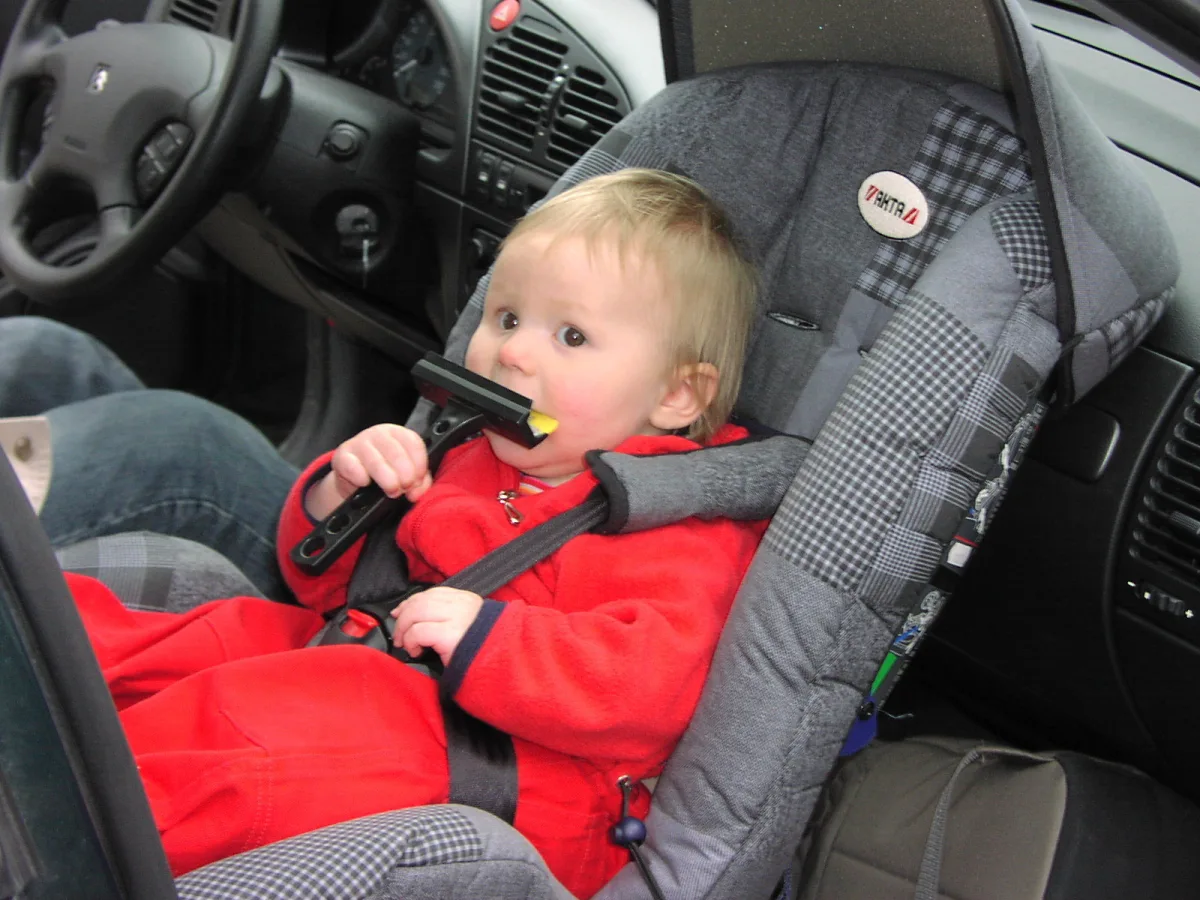
Front-seat rules are tighter still: do not put a rear-facing baby seat in front of an active passenger airbag. Child seats generally need a diagonal belt unless designed for a lap belt or fitted on ISOFIX. Side-facing seats are out.
Those are the safety defaults. The taxi trade lives in the exceptions.
Age, height and who is legally responsible
Responsibility is not split the way many passengers assume.
Until a passenger is 14, the driver is legally responsible for making sure they use the correct restraint or seat belt as the law requires. From 14 upwards, the passenger is responsible for their own belt. That allocation is set out clearly on the industry-facing summary at childcarseats.org.uk (the RoSPA / DfT-backed Child Car Seats site) and matches how the courts treat offences under the seat-belt regime.
In plain English for a working driver:
- Under 3 — correct child restraint is the starting point. Taxi/PHV rear-seat exception below.
- From 3rd birthday until 12 or 135cm (first of those) — correct child restraint is the starting point. Taxi/PHV rear-seat adult-belt exception below.
- 12 or 13, or already 135cm+ — adult seat belt if fitted. Driver still liable until 14.
- 14+ — passenger’s own belt duty.
Penalties for failing to ensure a child under 14 is correctly restrained: typically a £100 fixed penalty, or up to £500 if it goes to court. It does not usually attract points in the way phone or speeding offences do — but insurance and civil claims can still follow a crash.
Taxis and PHVs: the big exceptions
GOV.UK’s taxi/minicab page is the one to bookmark.
If the correct child car seat is not provided, children may travel without one — but only on a rear seat:
- Under 3 — may travel without a child seat and without a seat belt
- 3 or older (still under the normal child-seat ages/heights) — must wear an adult seat belt
That is a practical exemption, not a safety endorsement. The Child Car Seats site says it was introduced for practical rather than safety reasons, and urges people to plan so a proper seat is available whenever possible.
Front seats are not a free-for-all. A child under 3 in the front still needs the correct restraint. Putting an infant on a lap in the front, or leaving a 5-year-old beltless in the front of a PHV, is not what the taxi exception covers.
The regulations behind this live in the Motor Vehicles (Wearing of Seat Belts) Regulations 1993 as amended (notably by SI 2006/1892). They talk about licensed taxis and licensed hire cars — i.e. hackney carriages and private hire vehicles. App-booked PHVs are still licensed hire cars for this purpose.
Other exceptions drivers should know
Outside the taxi/PHV rules, a few other carve-outs matter on school, airport and family work:
- Unexpected, necessary, short journey — a child aged 3+ may use an adult belt if no suitable child seat is available. This does not rescue under-3s in a private car.
- No room for a third child seat in the rear — under-3s still need a proper seat (move them to the front with the correct seat if needed); 3+ may use an adult belt in the rear.
- Vehicle with no belts — rare on modern fleets; under-3s cannot lawfully travel without a restraint system.
Medical exemption certificates can also apply where a doctor certifies a child cannot use a restraint.
Does the driver have to provide a child seat?
No national road traffic rule forces a taxi or PHV driver to carry a range of child seats.
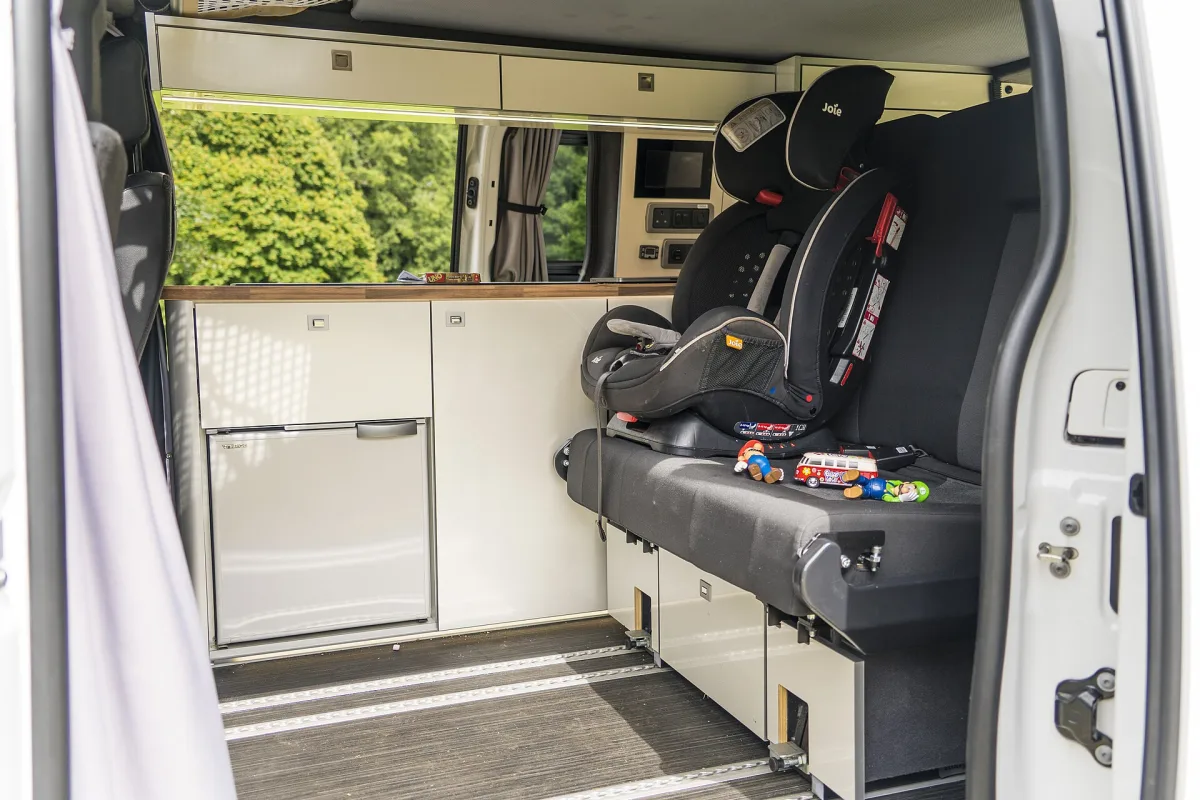
GOV.UK’s wording is telling: the taxi exception applies “if the driver does not provide the correct child car seat”. That assumes provision is optional, not mandatory. Parents and carers can bring their own seat if the vehicle can take it (belt or ISOFIX). Operators sometimes advertise seats as a paid extra or pre-book option — commercial choice, not a GB-wide legal duty.
Transport for London has put the practical problem on record in its Taxi and Private Hire Action Plan update: child car seats are “currently not a requirement” for children travelling with an adult in a London taxi or PHV; storage and the mix of ages/heights make carrying a full set difficult. TfL says allowing passengers to select a vehicle with a restraint is being discussed with the trade. That is policy conversation, not a change in the criminal law.
Ashford Borough Council’s licensing policy is typical of many districts: it restates the national taxi exemptions, recommends parents plan ahead (including collapsible travel seats), and notes it is “not considered viable” to expect every driver to carry a variety of seats — while inviting operators who want the business to keep some available.
Have taxi or PHV drivers been charged?
Confirmed court convictions specifically for taxi child-seat breaches are thin in public reporting. What shows up more often is roadside confusion.
In August 2018, Hull private hire driver Steven Leadley was stopped on the A63 with a one-year-old on the mother’s lap in the rear and told to expect prosecution. Hull licensing confirmed the national exemption; Humberside Police later said there appeared to be no road traffic offence and no licensing breach, and that they would contact him to say so — as reported by Hull Live.
In August 2022, Coventry officers reported an Uber PHV driver after finding an under-3 infant unsecured on a passenger’s lap, according to TaxiPoint. Public reports of that stop mixed child-restraint rules with partition/seat-belt points. The lesson for drivers is not “the exemption never bites” — it is that officers sometimes misapply it, and that anything outside the rear-seat exception (front seat, older child without a belt, no adult belt when one is required) can still be a real offence.
Carry a calm explanation and, if challenged, the GOV.UK taxi/minicab wording. Do not invent your own rules.
Can local licensing overwrite national law?
Short answer: no — not the Road Traffic Act seat-belt offences.
National criminal law on wearing seat belts and using child restraints is set by Parliament and the seat-belt regulations. A council cannot invent a byelaw that abolishes the taxi/PHV exception, nor legalise something the national regulations forbid.
What councils and TfL can do is layer licensing conditions, policies and recommendations on top:
- Restate that drivers must comply with seat-belt law
- Discourage children in the front
- Ban under-10s in the front as a licence condition (some authorities do tighten front-seat practice)
- Encourage operators to offer seats without making every driver a travelling nursery
Those conditions are enforced through the licensing regime (warnings, points schemes, suspension, revocation) — a different track from a £100 roadside fixed penalty. Always read your own authority’s handbook. National minimum standards for taxi and PHV licensing are a live policy theme after the Casey work and the government’s late-2025 push for national standards powers — but those conversations are about driver vetting, safety and accessibility, not a published rewrite of the 135cm / taxi child-seat exception.
Any planned changes?
As of writing there is no GOV.UK announcement replacing the 12 / 135cm threshold with Ireland-style 150cm advice as UK law. Safety bodies often recommend keeping children in suitable restraints beyond the legal minimum; that is advice, not statute.
What is changing around the edges:
- Product standards — R129 / i-Size continuing; R44 products winding down for new manufacture; rear-facing to 15 months on height-based seats
- Operator offers — more pre-book “with seat” products on apps and airport runs
- TfL trade talks — optional selection of vehicles with restraints, not a London-wide carry mandate yet
- National licensing standards — possible future minimum conditions after consultation; watch whether child seats ever appear as an accessibility/safety item
Until statute changes, the taxi/PHV rear-seat exceptions remain good law.
Practical takeaway for the trade
Know the two-line version off by heart:
1. No suitable child seat in a licensed taxi or PHV → under-3 may travel unrestrained in the rear; 3+ must use an adult rear seat belt.
2. You are liable for getting that right until the passenger is 14.
You do not have to stock every Group 0+ to Group 3 seat. You do have to refuse unsafe improvisation in the front, insist on adult belts when the exception requires them, and keep your temper when someone quotes “every child needs a seat” without reading the taxi paragraph.
Safer still: if a parent brings a seat, help them fit it properly; if your operator sells a seat option, use it; if you are unsure, rearrange so the child is in the rear under the exemption rather than improvising in the front.
The exemption keeps the trade workable. It does not make an unrestrained toddler crash-proof. Drive as if both things are true.